
A wink and a nod. Essay. 1200 words, 6-minute read.
Fictional and Fraudulent Memoirs
By Ray Tabler
Publishing, as we currently think of the term, is a relatively recent development. Before Gutenberg’s handy dandy book-producing machine literature had to be hand copied by monks, scholars, and scribes on to specially prepared animal skins (parchment). It was time consuming and expensive, for a limited audience of the tiny minority of people who could read.
Aside from official documents and religious texts, most of what was written down consisted of diaries and memoirs. People, the few who were literate, recorded their lives for posterity, for their families, to relate what really happened. Telling your side of the story was and is a powerful motivator.
Then, often those memoirs were squirreled away on a back shelf of the family library or at the bottom of a trunk up in a dusty attic. Scholars and historians regularly unearth such historical gems while trolling through old libraries and forgotten storage cupboards. Sometimes it changes history, or at least our understanding of what happened.
Fiction writers are always eager to employ interesting twists to hook readers. And writing a tale as if it were the publication of a recently found memoir is one of the best types of bait to dangle from that hook. The lure has been used a number of times, and it works.
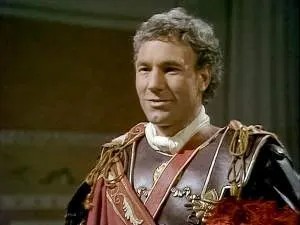
I Claudius, 1934 by Robert Graves, is a novel in the form of the previously unknown autobiography of ancient Roman Emperor Claudius (10 BC – 54 AD). Graves wrote the book because he had some large debts to pay and was honest about I Claudius being a work of fiction. No actual ancient documents were uncovered beyond the historical accounts available to everyone else. Graves did, however, have a talent for fictionalizing the dry historical record, bringing the story to life with heaping helpings of sex, violence, tragedy and revenge plots. Always a good way to cook up a page turner. In 1976 the BBC produced an acclaimed TV series based on I Claudius, featuring a boatload of famous British actors (including Patrick Stewart when he still had hair.)
Graves’s formula was such a good idea that science fiction author A. E. van Vogt did him one better, and published Empire of the Atom, serialized in 1946-1947, then published as a novel in 1957. Empire of the Atom is essentially the plot of I Claudius set in space. Ten thousand years into the future Earth, Mars, Venus, and Europa replace Rome, Germany, Gaul and other ancient Roman regions in van Vogt’s retelling. I forget which is which. It was pretty obvious what van Vogt had done, but the book sold well anyway. And, honestly, hadn’t Graves just jazzed up history with tense dialog and thrilling action scenes?
C. S. Forester’s Horatio Hornblower novel series, 1937 – 1967, is a (very) thinly veiled fictionalization of the life of British Napoleonic Wars naval hero Admiral Horatio Nelson. Science fiction author David Weber used Hornblower and Nelson for his voluminous series of novels about Honor Harrington, an interstellar naval officer rising through the ranks to command the Royal Manticoran (Space) Navy. Back on Earth, Patrick O’Brian wrote the Jack Aubrey books, inspired, in large part, by the historical fearless and fire breathing British Royal Navy sailing-days captain Thomas Cochrane. As with I Claudius and Empire of the Atom, readers knew they were buying a retelling, and no one seemed to have any problem.
The Flashman Papers by George MacDonald Fraser requires a bit of backstory. Tom Brown’s School Days, by Thomas Hughes 1857, was a moralistic tale of a good, stout-hearted boy (Tom Brown) who endures trials and tribulations at a Victorian-era boarding school before eventually triumphing over another student and cruel bully, upperclassman Harry Flashman.
Frasier recognized literary gold in the Flashman character. After suffering the scandal of Tom Brown’s School Days, Harry Flashman’s family buys him a commission in the army to get him out of England. However, Harry is a coward, a rake, and a cad, who is continually trying to avoid duty and discomfort. Fate plays with Flashman, placing him in the middle of just about every prominent Victorian era battle from the charge of the light brigade to Custer’s last stand, like an 1800s Forrest Gump. By accident, Flashman gains a totally undeserved reputation as a courageous soldier, who longs for danger and glory.
George MacDonald Frasier published eleven Flashman novels between 1969 and 2005. The foreword claims Harry’s disgraceful memoirs, telling the true, appalling story of Flashman’s life were discovered during a renovation of the family estate. Readers ate all of this up with a spoon. And other authors hopped on the Flashman gravy train. Upon the assumption that villainy runs in the family, Robert Brightwell wrote three novels about Harry’s reprobate uncle Thomas Flashman, who behaved similarly all through the Napoleonic wars. Paul Moore wrote a novel about Harry’s illegitimate son’s dishonorable service in World War I. Harry Flashman and the Invasion of Iraq by H.C. Tayler is about a modern-day member of the Flashman clan carrying on the family tradition. Flashman is the dastardly gift that just keeps on giving.
Fictional (found) memoirs fall under the heading of historical fiction. However, they might be classed as what is called secret history. That is unsuspected history which fills the dark crevices and gaps which are perhaps best left untold. Secret history is a sketchy, black-market border town, straddling the line between historical fiction and alternate history. This community traffics in Area 51 aliens, the lost continent of Atlantis, and the Illuminati/cryptids/Antarctic Nazi base complex. Among other specialties. Short on proof but entertaining none the less.
There’s a market for books of secret history because very few take it seriously. It’s all innocent fun, pretending that such fantasies could’ve happened. Until somebody goes too far. And that has occurred more than once.
It’s tempting to seriously pass off fiction as fact. In 2003 James Frey published A Million Little Pieces, a gripping bestseller purporting to be the story of his battles with addition. It was largely fabricated. Five years later Margaret Seltzer’s account of a foster child dragged into Los Angeles gang culture was completely fake. Misha Defonseca’s Misha: A Memoire of the Holocaust Years, 1997, tells an unbelievable story of a child who walked across Europe and lived with wolves to escape and survive. There’s a reason it’s unbelievable. Defonseca made it all up. Clifford Irving wrote a fake autobiography of Howard Hughes, fooling McGraw-Hill with forged letters and interviews. Howard Hughes was not fooled and sued. Clifford Irving went to jail. In 1983 the German magazine Stern published parts of Hitler’s diaries supposedly found in the wreckage of a crashed World War II airplane. The hoax unraveled. The Stern editor who masterminded the caper served prison time for forgery and defrauding his employer of $3.5 million.
The differences between fraudulent memoirs and fictional ones are intent and honesty. Fictional memoirs are understood to be fictional. The writer is upfront about his creation, with a bit of obvious fibbing about unearthing the memoir from a dusty trunk in the basement of an old library for marketing purposes. The author and the reader share a wink and a nod, which allows us to get on with the business of enjoying a good yarn, no matter how outlandish. Fraudulent memoirs betray that trust. No matter how well written and compelling the story, hell hath no fury like a reader deceived.
END.
Shameless Self-Promotion Section:
Check out my novels at Histria Books https://histriabooks.com/product-tag/ray-tabler/ and on Amazon https://www.amazon.com/stores/Ray-Tabler/author/B09H62RZB9
- The Diesel-Powered Starship (due for release in September 2025) https://histriabooks.com/product/the-diesel-powered-starship/
- A Grand Imperial War (Book 1 of the Grand Imperial series) https://histriabooks.com/product/a-grand-imperial-war-grand-imperial-series-book-1/
- A Grand Imperial Heir (Sequel to A Grand Imperial War) https://histriabooks.com/product/a-grand-imperial-heir-grand-imperial-series-book-2/
- Fool’s Paradise https://histriabooks.com/product/fools-paradise/
And visit my website https://raytabler.com/ for Science Fiction You Can Enjoy!