
Good badness. Essay. 900 words, 5-minute read.
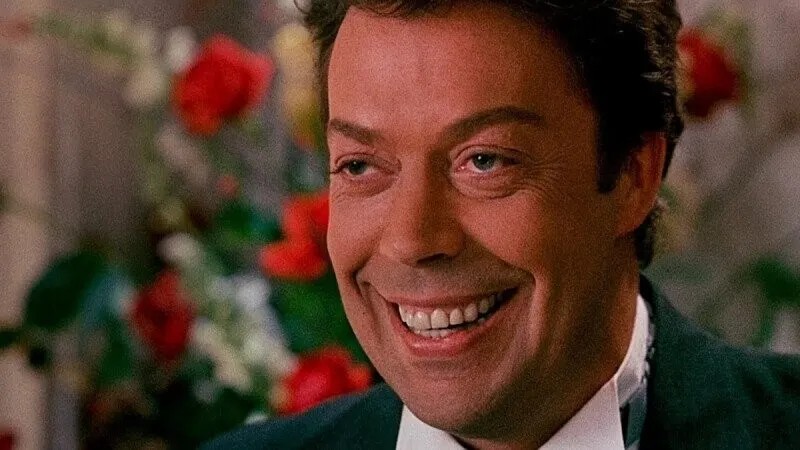
Good Bad Guys
By Ray Tabler.
There is an undeniable allure to the bad guy. The villain. The heavy. The antagonist. As a story teller, I feel that tug even more than the reader.
As a matter of fact, the author is, in a very real sense, the villain. The writer is compelled to throw challenges and stumbling blocks in the hero’s path. It makes for a more interesting story, torturing the main character(s).
So, we feel a naughty sympathy with the bad guy. The villain and the author are on the same page, causing trouble for the hero. We do it all for you, dear reader.
Make no mistake. The author and the villain are in a marriage of convenience. But marriages of convenience can be fun too. It’s a delicate balancing act. A satisfying tale dictates that the hero must come out on top by the end. But it can’t be too easy. That would be boring.
The villain is our private, little Sisyphus, continually muscling the giant stone of evil plans up the hill. Only to watch them roll back down again as the hero triumphs.
Let’s start with the old-fashioned, gilded age, mustache-twirling villain. Snidely Whiplash of the Dudley Do-Right cartoons. Simon Legree from Uncle Tom’s Cabin. Professor Fate of the parody The Great Race. They have become caricatures of themselves, but are tragic figures none the less. Beneath the sneering wickedness they suspect doom in their futures. Professor Fate is shown repeatedly losing to his heroic nemesis Leslie Gallant III in the opening scenes of The Great Race. Besting Leslie becomes his entire motivation.
A grudging sympathy for Fate is inevitable. He knows in his bones that he will never defeat Leslie. But he never gives up. That’s chutzpa.
More contemporary villains are portrayed in a compassionate light. The villain is the hero of his own story. Trouble is, it’s not his story I’m telling. It’s mine. And the bad guy is destined to lose.
Dr. Horrible’s Singalong Blog is a short film about a mad scientist besotted by love. Of course, the not-so-heroic hero, Captain Hammer gets the girl in the end. And Dr. Horrible is left only with his sad, evil schemes. Gru, in Despicable Me, is the only villain I am aware of who gets a happy ending. But he has to transform into a bit of a good guy to do it. Or maybe, the goodest of the bad guys would be more accurate.
That is recurring theme for bad guys, transitioning into good guys. Sometimes the flirtation with niceness is only temporary. The above-mentioned Dr. Fate’s henchman, Mean Max Meen, is forced to join forces with Leslie Gallant to spring Fate, and a damsel in distress, from the clutches of an even more evil villain. Doesn’t last. Fate and Max are back to plotting Leslie’s explosive demise before the credits roll.
Just as often, however, the reformed villain is permanently converted to the other side. The Fast and Furious movie franchise does this a lot. Dominic Toretto was originally not exactly on the up and up. Dom’s wife, Letty Ortiz, was also a criminal to start with. Dom’s brother Jakob was the main villain in one movie, until he joined the team. The entire Shaw family, Deckard, his brother, sister, and mother too, all actively plotted the deaths of the heroes before being recruited to the crew. Can’t beat ‘em, join ‘em.
The Star Trek universe is littered with former bad guys who signed up for the Federation. The Klingons were captain Kirk’s perennial scourge. By the time Picard was in charge, there were Klingons in Star Fleet. And they’d transformed into an interstellar version of the Dukes of Hazard. Just some good ol’ boys. Never meanin’ no harm. Even selected Cardassians, Garak and (maybe) Gul Dukat, were straddling the good/bad dividing line on Deep Space 9 in later seasons. Okay, Sisko wisely didn’t really trust either of them. They were still bad guys, but maybe not bad guys. And who could forget the Maquis characters reluctantly welcomed into Voyager’s crew out of necessity. Because, when you’re marooned in the delta quadrant, alpha quadrant disagreements don’t seem all that important anymore.
There’s a risk when creating a good villain. The more believable and human you make them, the more relatable they’ll be. Some readers/viewers will start rooting for them. Then, the debate arises. Who’s the good guy, and who’s the bad? Awkward. Yzma from the Emperor’s New Groove, and The Wet Bandits from Home Alone might fall into that bin. Sylvester the cat, and Wiley Coyote too. How many times can ACME products let him down?
And, for some reason, villains get all the best lines. The MCU’s Loki “…I’ have been falling for 30 minutes…” and “…burdened with glorious purpose…” Scar from The Lion King: “…I’m surrounded by idiots…” The Joker: “…Why so serious?”
Crafting a bad guy is tough. You want to make them good in their badness. Too evil, too focused, and they become wooden and one dimensional. As great a book as Lord of the Rings is, Sauron falls into that trap. Where Saruman is more nuanced, a good wizard gone bad. If the villain is too relatable, there’s a risk the reader will feel sympathetic, then shift alliance away from the nominal hero. Maybe that’s what you’re after. A subtle twist, if you can pull it off. Treasure Island’s Long John Silver manages that transformation, without changing in any significant way. The reader simply decides they want to be a little bit bad too.
END.
If you’re interested, I’ve also written what could be considered a companion piece to this one about bad guys, about henchmen: https://raytabler.substack.com/p/henchmen-and-sidekicks
Shameless Self-Promotion Section:
Check out my published novels at:
Operation Bedrock, Containment Protocol book 1, is available here: https://www.amazon.com/dp/B0HPR71945
nazcapress.com/product/smitty/NP/52/ (Smitty’s Guide to Interstellar Bartending, available now!)
https://histriabooks.com/product-tag/ray-tabler
amazon.com/stores/Ray-Tabler/author/B09H62RZB9
And visit my website https://raytabler.com/ for Science Fiction You Can Enjoy!