
Star Trek vs Mad Max. Essay. 1100 words, 6-minute read.
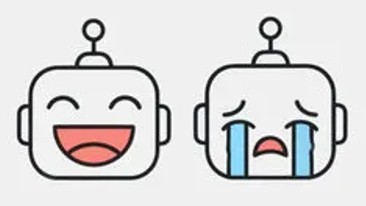
Good News Bad News
By Ray Tabler
I have good news and bad news.
First the bad news. The robots are coming to take our jobs, enslave us, and maybe exterminate us. (Terminator, Westworld, The Matrix, Robopocalypse) The aliens are coming to conquer and enslave us, if they don’t exterminate us. (War of the Worlds, Independence Day, V, Dark Skies) A nuclear war, or global famine, or the end of oil is coming, which will send us all back to a squalid, anarchic dark age, if any of us survive. (Mad Max, Fallout, 12 Monkeys, On the Beach) Biotechnology is coming, and will escape our control to result in clones, zombies, global pandemics, and/or a genetic caste system, if it doesn’t kill us all. (The Island, World War Z, Contagion, GATTICA)
Now for the good news. The future is bright, prosperous, and increasingly free from coercion. (Star Trek, The Expanse, Futurama)
Welcome to science fiction. Pick a prediction, and grab some popcorn.
Science fiction is, in large part, dragooned into being a crystal ball, or a weather forecast for coming decades if not centuries. In truth, science fiction writers are more like fortune tellers than meteorologists. And not legit psychics either, assuming you believe in legit psychics. Opinions vary. We’re more like the sketchy carnie midway palm readers, who know enough parlor tricks and psychology to observe the mark’s reactions to open-ended, probing questions and then tell the customer what they want to hear. That’s the way to maximize profits.
And since most of science fiction authors are in the business of chasing down the almighty dollar, telling stories the reader/viewer wants to hear/view is the preferred path. Some of us are better at that game than others. You can gauge success, as most define it, by the length of lines at autograph sessions.
And what does the public want? Slasher flicks and romance novels for the most part. But science fiction still manages to find an audience. Segmented and Balkanized as it might be.
Another thing the public seems to crave is bad news. There’s an old saying in the TV news business. “If it bleeds, it leads.” Meaning, people like to watch tragic events. Maybe it makes them feel better about their relatively tragedy-deficit lives.
Whatever the driving forces, a sad, tragic story seems to sell better than an upbeat tale. Oh, the hero can win in the end. But he’s gonna go through hell first. Science fiction is prone to nasty, catastrophic settings because science fiction authors can prognosticate things going off the rails in truly frightening ways. People view new things with suspicion. That’s probably a survival trait.
The whole long list of new and annoying (if not hazardous) aspects of technology and the future is cataloged above. AI, climate change, nuclear war, societal collapse, technology run amok… Frankly, it’s not that hard to pick any one (or more) of these, and simply extrapolate to a logical, and terrifying extreme. Tack on some sympathetic characters caught in the crossfire, and the story practically writes itself.
Of course, there are consequences. The movie China Syndrome, about a meltdown at a nuclear plant, single-handedly torpedoed the nuclear power industry for decades. We’re just now cautiously creeping back into that area. Maybe you consider that a good thing. The neighbors of Three-Mile Island and Chernobyl probably think so. Atomic power that just makes steam and tamely stays within containment doesn’t provide much entertainment.
All of those 1950s and 1960s alien invasion movies sure lodged in our subconscious. If and when we do have a verifiable close encounter, that will be front and center. Are these ETs nice or nasty? Schrodinger’s aliens. We know which kind sells more books and movie tickets.
The current fashion in panic lit is AI. Don’t get me wrong. Skynet, or something similar, might very well be in our future. Generations to come could conceivably live lives of aimless servitude, chips implanted to facilitate tracking by soulless, cybernetic overseers. A Hobson’s choice of AI control or obsolescence is entirely possible. How likely are these worst-case scenarios? At least I hope there’s nothing worse coming down the pike. Who knows?
But, my money’s on humanity steering a course through these shoals and reefs. We are nothing but naked apes, not far removed from the trees, flinging poo at each other. (Well, we haven’t quite abandoned that poo-flinging habit yet.) However, we are clever little monkeys, with the survival instincts of bipedal cockroaches. Humanity has yet to meet another species it couldn’t hound to extinction. That’s got to count for something.
Maybe panic sci-fi is just one aspect of those traits which took us straight up the pyramid to mastery over this insignificant ball of mud-crusted molten rock. Apocalyptic, alien-attacking, robot-phobic stories scare the crap out of us, with a purpose. They provide motivation to maybe not go too far down the wrong road, shiny as that new tech is under the lab’s fluorescent lights. Strange how advanced science can slide off into mad science without much warning. In the 1920s, x-ray therapy was all the rage. Good for what ails you, and gives you a neat tingly feeling all over. In the 1930s, eugenics was going to perfect the human race. Just don’t let those people with glasses breed, and soon we’ll all have 20-20 vision. (Spread to sterilizing people with the wrong skin color, or those whose IQ wasn’t quite up to snuff.) Which led to a bumper crop of death camps. So, pessimistic science fiction might be characterized as free-lance societal impact studies.
Optimistic science fiction is, ironically, both harder to write and less appealing to the market. Without the big bad techno/alien/cybernetic threat looming all of the conflict and drama have to come from characters and plot. Which means the writer has to work harder. And we are typically a lazy bunch. Then there are the ungrateful, feckless readers. Disaster fiction is just inherently more exciting than more upbeat stuff. That’s why there’s less positive science fiction around than the doom and gloom variety. It just tales more literary effort to produce good news stories than bad news tales.
Frightening, depressing science fiction serves a useful purpose. Such stories provide a multitude of societal thought experiments. What might be down this road? Do the potential drawbacks outweigh the promised benefits? Or, more likely. We’ve got this new tech. Somebody’s bound to use it. Here’s how bad things might get. So, you best prepare for the worst.
There’s not nearly as much positive science fiction about. And maybe we don’t need all that much of it. A light sprinkling of Star Trek positivity here and there is enough to remind humanity that we can fix our own problems, once we’ve exhausted all other possibilities.
END.
Shameless Self-Promotion Section:
Check out my published novels at:
nazcapress.com/product/smitty/NP/52/ (Smitty’s Guide to Interstellar Bartending, available for preorder now!)
https://histriabooks.com/product-tag/ray-tabler
amazon.com/stores/Ray-Tabler/author/B09H62RZB9
And visit my website https://raytabler.com/ for Science Fiction You Can Enjoy!